
Technical guide · Updated 16 September 2026
What Is Downproof Fabric?
Understand downproof fabric as a system of construction, yarn, finishing and garment details rather than a single fibre or coating claim.
Quick answer
Downproof fabric is designed to reduce the movement of down or feather filling through the fabric and finished garment. It is not defined by one fibre, denier or finishing process.
Start with the base construction
Yarn size, filament configuration, weave density and fabric cover all matter. Two fabrics with the same nominal denier can behave differently because construction and finishing differ.
Understand the role of finishing
Calendering or cire can alter surface, handle and air permeability. Coatings or other finishing routes may also change containment, softness, breathability, weight and appearance.
Do not ignore garment construction
Needle size, stitch density, seam construction and quilting can create filling paths that do not exist in an unsewn swatch. Review shell, lining, filling and sewing together.
Buyer specification checklist
What to include in the development brief
- State whether the fabric is an outer shell, lining or another filled-garment layer.
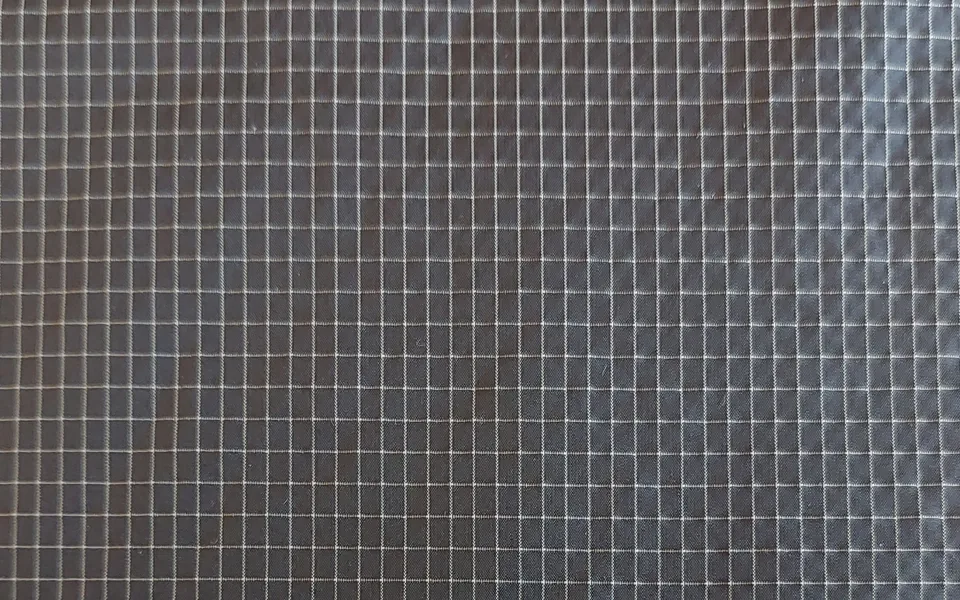
- Record yarn denier and filament information where known, plus weave or ripstop-grid details.
- Include finished GSM, width, colour, transparency and handfeel targets rather than relying on denier alone.
- Describe calendering, cire, coating or other surface-finishing preferences and which face is treated.
- If containment or air permeability is a requirement, name the customer method, target and any pretreatment.
- Share needle, seam, baffle or quilting context when garment construction may affect filling leakage.
Development note
How to keep the approval record clear
For sample approval, keep visual and tactile decisions separate from measurable performance. Colour, transparency, sheen, noise and softness can be compared on a physical swatch, while filling containment, air permeability, tear or repellency should be recorded with the agreed method. A swatch that looks similar is not automatically technically equivalent after sewing or finishing.
Buyer questions
Does a lower denier automatically make a fabric more downproof?
No. Denier describes yarn linear density, not the complete fabric construction.
Is cire the same as downproof?
No. Cire is a finishing process; containment must be evaluated on the actual construction and end use.